
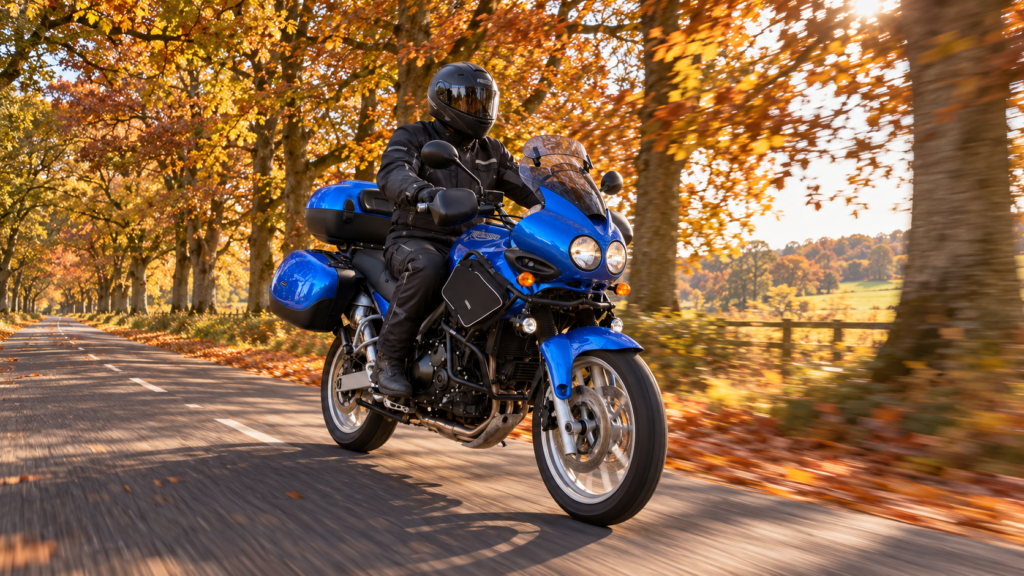
Now that autumn is officially here, the riding season is drawing to a close for many of us. Thankfully, summer has been reluctant to leave this year, giving us fair-weather riders a few very welcome extra ride-outs, but winter is looming and thoughts are turning to preparing our bikes for the long lay-up.
Seasoned riders know that a little effort now pays dividends when spring finally comes around and it is time to dust off our helmets for the new riding season.
Here are our recommendations for your bike’s winter sabbatical.
Cleaning and inspection
Give it a proper wash to remove the dirt and road film gathered over the riding season, then dry it thoroughly. Get right into those awkward spots where dirt and water can sit. Cleaning is also an excellent opportunity to look for leaks, corrosion, loose fittings, damage and general wear.
If you noticed any faults during your last few rides, make a note of them now. Otherwise, there is a fair chance you will forget about them until the day you want to ride again.
Clean and lubricate the chain if your bike has one. Protect suitable exposed metalwork with a light application of a moisture-repelling multi-use spray. I use GT85, but there are plenty of similar products available. Spraying it onto a cloth first gives better control. Follow the manufacturer’s instructions and keep it well away from tyres, brake components, the seat, grips, foot controls and anything else that needs to provide grip.
Make a plan for the fuel
Fuel is an important consideration when preparing any motorcycle for winter. E5 is always the preferred choice over E10, particularly for older motorcycles and for any bike in which the petrol will remain unused for an extended period. Its lower maximum ethanol content reduces moisture absorption and the material-compatibility problems associated with ethanol.
If your bike is going to sit unused for several months, then there is a separate question: how much fuel should be left in the tank? That depends largely on what the tank is made from.
With a metal tank, filling it with fresh E5 petrol to the manufacturer’s normal maximum level reduces the air space in which condensation can form and helps protect the inside from corrosion. Leave the intended expansion space and consider adding a fuel stabiliser suitable for ethanol-blended petrol. Add it before the final ride so that the treated fuel circulates through the system.
A plastic tank cannot rust internally, so there is no corrosion-prevention reason to leave it full. If the tank is known to swell, distort or develop paint blisters after prolonged exposure to ethanol-blended petrol, drain it correctly before storage rather than filling it, even with E5. Do not attempt to empty a fuel-injected system by running the fuel pump dry, as that could damage it.
On carburetted motorcycles, drain the float bowls before storage. Petrol left in them can evaporate, leaving gum and varnish deposits that may block the jets and other small fuel passages.
We have covered the subject in more detail in Why Old Fuel Causes Starting and Running Problems in Motorcycles and E5 vs E10 Petrol for Older Motorcycles.
Look after the battery and tyres
A battery can lose charge and deteriorate internally while the bike sits, especially if an alarm or other equipment continues to draw power. Check its condition and use a maintainer suited to the battery type. Alternatively, remove the battery and check its resting voltage periodically. A 12-volt lead-acid battery should be kept at around 12.7 volts or above and recharged before it falls to approximately 12.4 volts. These figures do not apply to lithium batteries, which require a compatible charger and different storage-voltage guidance.
Ensure the tyre pressures are correct and inspect the tread and sidewalls carefully. Leaving the motorcycle’s weight resting on the same areas of the tyres for several months can cause deformation or flat spots, particularly if the pressures are low. If your bike has a centre stand, use it to reduce the weight resting on the tyres. If not, suitable paddock stands are a good alternative. Check the pressures periodically and again before returning the bike to the road.
Store it somewhere dry
A dry, secure garage is ideal. If you use a cover, make sure it is suitable for where the bike is stored and does not trap moisture against it. If the bike is liquid-cooled, check the antifreeze protection and coolant level. Note any other servicing that will be due before the next riding season; if an oil and filter change is already due, doing it before storage avoids leaving contaminated oil in the engine throughout the winter.
Once your bike is laid up, do not start it periodically simply to let it idle. Water vapour is produced during combustion, and a brief run may not get the engine oil and exhaust system hot enough to drive that moisture off. If you use the bike during winter, take it for a proper ride when the road and weather conditions are suitable; otherwise, leave it alone.
The winter lay-up is a good time to sort the small jobs you have been meaning to tackle, whether that is a tired hose, a missing luggage bump stop or something else you spotted while cleaning. Then, when spring finally arrives, your bike is ready for you to make the most of the finer weather.