Modern petrol isn’t quite the same stuff that older motorcycles were designed to run on.
Most riders are aware that E10 petrol contains ethanol, but fewer people realise how that change can affect certain materials and components found in older fuel systems.
For many modern bikes it isn’t a major issue. For others — particularly machines designed before ethanol‑blended fuels became common — it can introduce a few quirks that are worth understanding.
Which is why many riders always reach for E5 petrol when it’s available at the pump, despite its premium price.
A Quick Bit of Fuel History
For most of the 20th century, petrol contained no ethanol at all.
Instead, fuels relied on additives such as tetraethyl lead to increase octane and improve engine performance. Leaded petrol remained common right up until the late 1990s, when environmental regulations led to its gradual removal.Once lead disappeared, fuel formulations began to change. One of the replacements used to maintain octane levels was ethanol — a bio‑derivd alcohol that can be blended with petrol.
Across Europe, ethanol blending began increasing during the 2000s, with E5 petrol becoming common around 2008 as part of renewable fuel initiatives.
The Key Point for Older Motorcycles
Motorcycles built prior to roughly 2008 were generally designed before ethanol‑blended fuels became widespread. Engineers at the time simply weren’t designing fuel systems around E10 petrol, because it didn’t yet exist in the market. That means some components — particularly certain rubber hoses, seals, and plastics — were not originally optimised for long‑term exposure to higher ethanol blends.
It doesn’t mean these bikes cannot run on modern fuels. But it does explain why riders occasionally encounter issues that were rarely seen when the bikes were new.
What Do E5 and E10 Actually Mean?
The “E” refers to ethanol content in the fuel — E5 – up to 5% ethanol and E10 – up to 10% ethanol.
In the UK today:
Standard unleaded (95 RON) is usually E10.
Super unleaded (97–99 RON) is typically E5.
Ethanol Absorbs Moisture
One of ethanol’s key characteristics is that it is hygroscopic — meaning it absorbs moisture from the atmosphere. Over time that moisture can accumulate in the fuel.
For motorcycles that are used regularly this usually isn’t a problem. But bikes that spend long periods parked up — over winter for example — can end up with fuel that degrades faster than riders expect.
Fuel left sitting in a tank for months tends to go stale, which is why problems related to old petrol in motorcycles are more common today than they were years ago.
Ethanol and Fuel System Materials
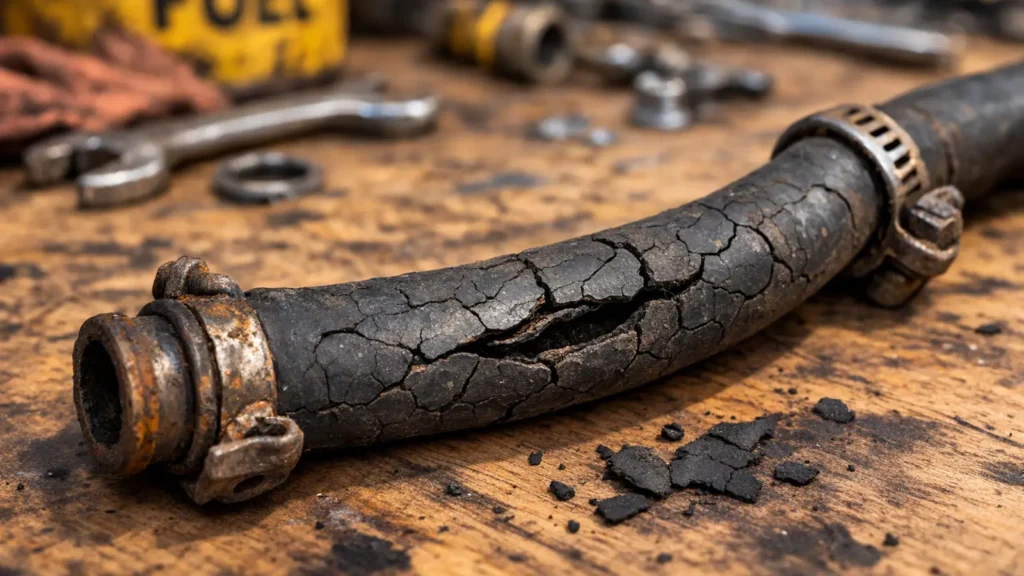
Some materials used in older fuel systems can gradually react with ethanol exposure over time.
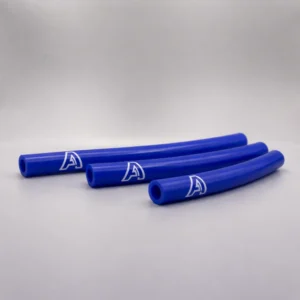
Over time, ethanol exposure and repeated heat cycles can accelerate ageing in motorcycle fuel hoses and seals, particularly those made from older rubber compounds. We look at how rubber hoses age over time in our silicone vs rubber hose comparison.
Possible effects include:
• swelling of rubber hoses and seals
• hardening or cracking of older rubber compounds
• gradual degradation of certain plastics
None of this happens overnight. It’s usually a slow ageing process that riders notice during servicing or when replacing hoses.
The Curious Case of Bubbling Fuel Tanks
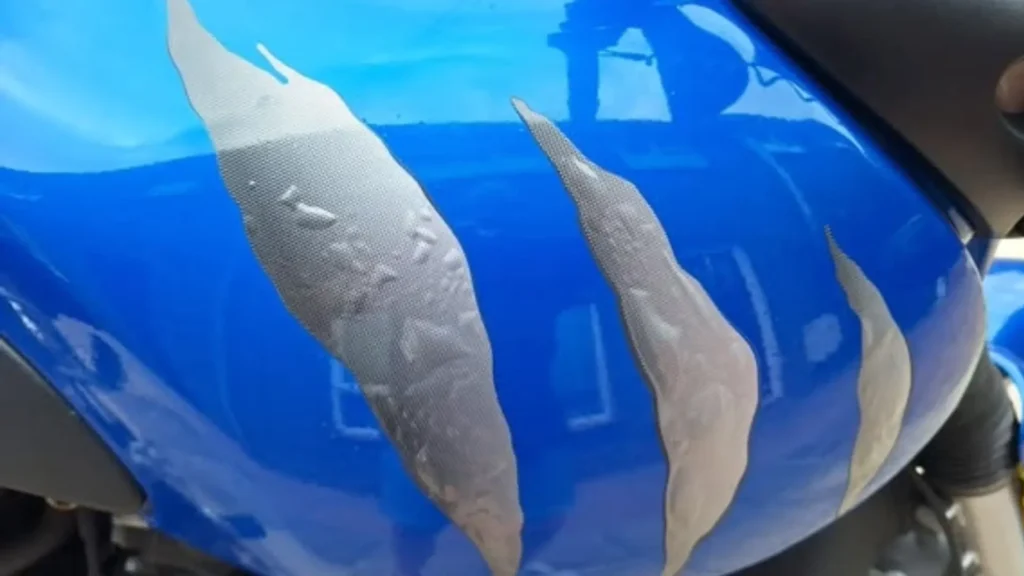
Owners of certain motorcycles — including some Triumph models — sometimes notice bubbling or blistering in the paintwork on plastic fuel tanks. A common explanation is that ethanol in modern petrol slowly permeates some plastic tank materials, eventually causing paint and decals to lift.
The tank itself is usually structurally fine, but the cosmetic effect can be frustrating.
Using lower‑ethanol fuels such as E5 can help reduce the rate at which this happens. Applying tank sealer internally can also help reduce or even eliminate the problem.
Why Many Riders Choose E5
Because of these factors, some riders prefer to use E5 petrol where it’s available, particularly on bikes that:
• spend periods in storage
• use older fuel system materials
• have plastic fuel tanks
• are maintained long‑term by their owners
E5 still contains ethanol, but the lower percentage reduces some of the side effects associated with higher ethanol blends.
Practical Advice
A few simple habits can help avoid fuel‑related headaches:
• Avoid leaving fuel sitting in the tank for long periods
• Use fresh fuel when bringing a bike out of storage
• Consider E5 petrol where available
• Inspect older hoses and seals periodically
Final Thoughts
Fuel formulations have evolved over the years, and older motorcycles occasionally reveal the side effects of those changes. Understanding the differences between E5 and E10 petrol helps riders make informed choices about how they maintain their machines.
And if nothing else, it provides a perfectly reasonable excuse to choose the slightly more expensive pump at the petrol station — purely in the interests of mechanical sympathy, of course and maybe a few extra miles per tank.
Related Workshop Notes
- Why Old Petrol Causes Running Problems in Motorcycles
- Silicone vs Rubber Hoses – What’s the Difference?